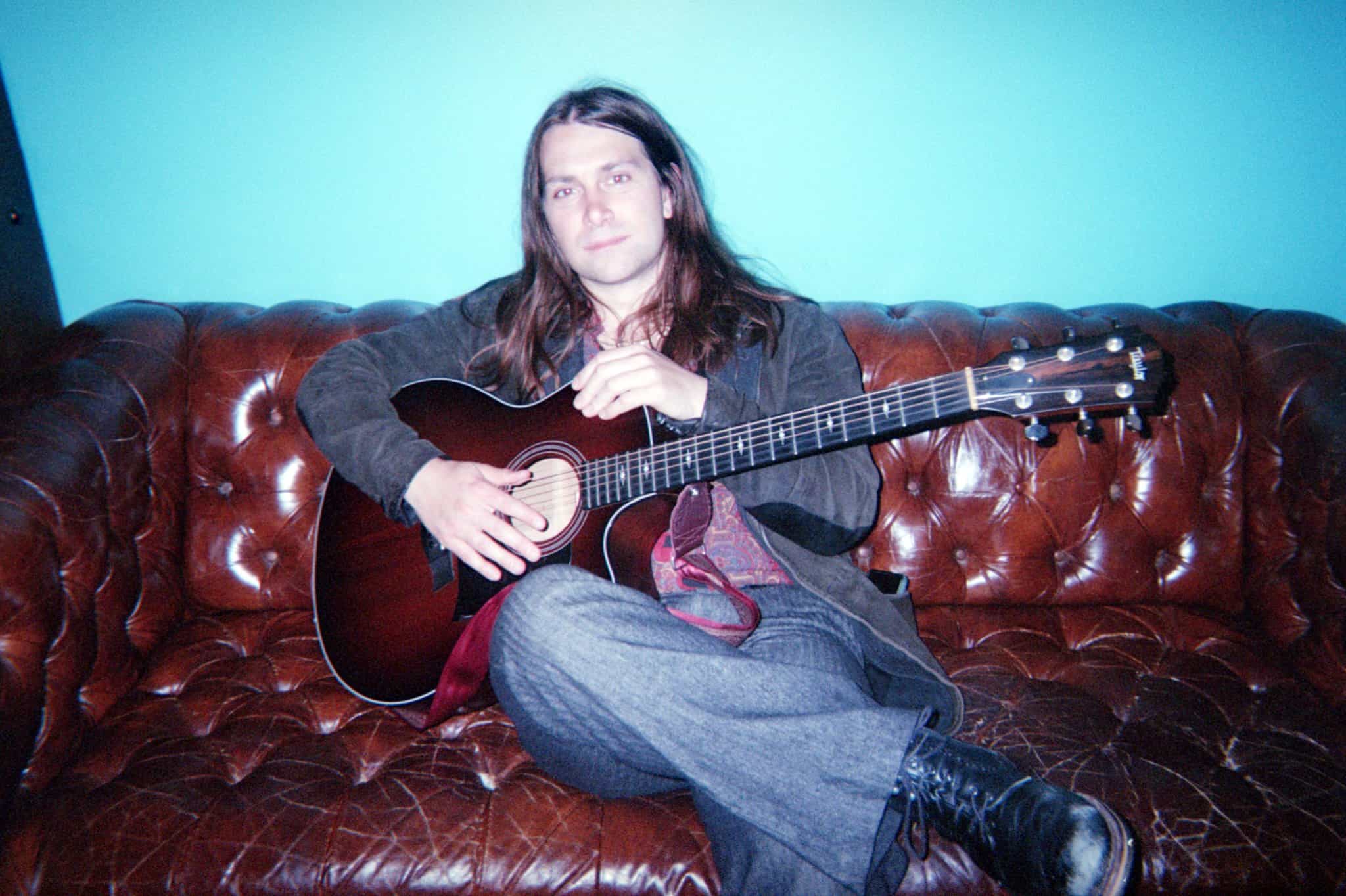
After years commanding Chicago stages with his indie rock band The Laughing Hearts, Tyler Stock emerges with his first solo EP, …To Be Lost And To Know It, a collection of folk-infused tracks that showcase his lyrical depth and radiant energy. Known for high-octane live shows and a knack for heartfelt storytelling, Stock trades the chaos of rock for introspective melodies that feel both timeless and immediate.
The EP is a celebration of reinvention. Each track brims with folk-driven instrumentation, buoyed by acoustic guitars, steady percussion, and Stock’s warm, expressive vocals. Lyrically, he explores the beauty of uncertainty, the thrill of self-discovery, and the intoxicating freedom found in getting “lost”, both literally and metaphorically. The songs are, as always, love songs: to life, to connection, and to the world itself.
We sat down with Tyler to learn all about the EP, what shaped the story behind it and much more, here at Music Crowns!
—
– Congratulations on your first EP “…To Be Lost And To Know It”! Please sum it up for us in three words for our readers?
Skin And Bones
– How did the concept of being “lost” influence the themes and overall feel of the EP?
I was thinking a lot about what it means to start over – I have been performing with my band “The Laughing Hearts” for most of my adult life and wanted to step out into something new and this came with its own challenges and freedoms. I was anxious to branch out and start releasing music under my own name, it feels a lot more naked or vulnerable than to use a band name – but it is also very freeing to start from scratch and build a new sound for a project without any preconceived expectation for the sound. I wanted to experiment with the instrumentation outside of the classic rock arrangement and had a lot of success in bringing in the bowed upright bass, played by Faraz Chaudry, and the violin, played by Danny Severance. I experimented with this a bit with a past EP called ‘Strawberry Coffins‘ which was released as “The Laughing Hearts” in 2022 and is kind of a spiritual successor to my solo work. I think the theme of being lost and using this feeling as a pushing off point for reinvention and exploration influenced the EP’s sound in that I felt a certain freedom to write and record in whatever way was most inspiring to me and to explore finding out more about what is inspiring to me in general.
– You brought together musicians from across Chicago’s music scene, some longtime collaborators and others met on the day of recording. How did these interactions influence the final sound?
I met Tyler Klivickis (Engineering / Mixing) in highschool – we played in a band together back then and have continued to be musically involved since then. We actually did a fun split EP in 2022 where our bands covered each other called ‘Welcome to the Chapel’. I was working with him on some vocal tracking for ‘The Laughing Hearts‘ earlier this year and had been kicking around ideas for this EP and felt that we would work well together for this. It is nice to have someone I trust working on the engineering / mixing side of things so I can focus on getting the takes and the instrumentation. I met Kyle Mccomb (Drums) and Danny Severance (Violin) on the day of recording, although I had opened up a show that Danny performed at a few weeks prior – I’m not sure if I actually introduced myself haha. Jacolyn Parker (Backing Vocals), Matt Coakley (Keys) and Faraz Chaudry (Bass) are all longtime collaborators and have worked with me and ‘The Laughing Hearts’ for recording and live performances over the years.
There was a good mix of planned instrumentation as well as improvisation – I felt very confident in the musicians that were chosen for this project so I sent out some notes and met with a few people before the recording sessions to give an idea of what I was looking for, but I also wanted to leave things up to interpretation and open for finding interesting parts while in the studio. I think this mentality fits with the overall themes of the album, and helps to bring out the best performances from everyone. Too much structure can take the life out of a recording and I think it’s good to have the freedom to improvise or make changes when a great idea presents itself.
– What was the recording and writing process like?
I started out writing on acoustic guitar, as I typically do, however, I was experimenting a bit with an open guitar tuning which can be heard on the first and last tracks of the EP. I had 10 songs ready to go for a full length album, but wanted to start with something a little more approachable since this is a new project – so I decided to try and write an EP from scratch and ended up writing around 6-7 songs. Eventually I condensed those to the three that made the EP. I recorded them as demos in my apartment with acoustic guitar, keys, bass, and vocals before sending the demos out to Tyler Klivickis at Chapel RCRDS as well as a few of the musicians I had in mind for the project.
From there, the songs were each tracked individually over the course of a few weekends. I started with acoustic guitars, vocals, and drums before bringing in the upright bass, violin, and mandolin textures. I left some intentional space in each song for instrumental sections that were generally written in the studio as we recorded and experimented with sounds.
– Your music blends indie rock energy with folk introspection. Which artists, past or present, have had the biggest influence on this sound?
Neil Young, Bob Seger, Tom Petty, Jason Isbell are a few artists that have inspired me both sonically and lyrically.
– And finally, what do you hope listeners take away from “…To Be Lost And To Know It”?
Like any music I have released over the years, I hope it can be of some comfort to someone. I want my songs to carry something universal within them. I hope my music can inspire others to approach all aspects of life with the enthusiasm and sincerity that it deserves. The world is out there waiting for you to engage with it and although you might not know what you’re supposed to do next – you can be sure you’re right where you need to be.