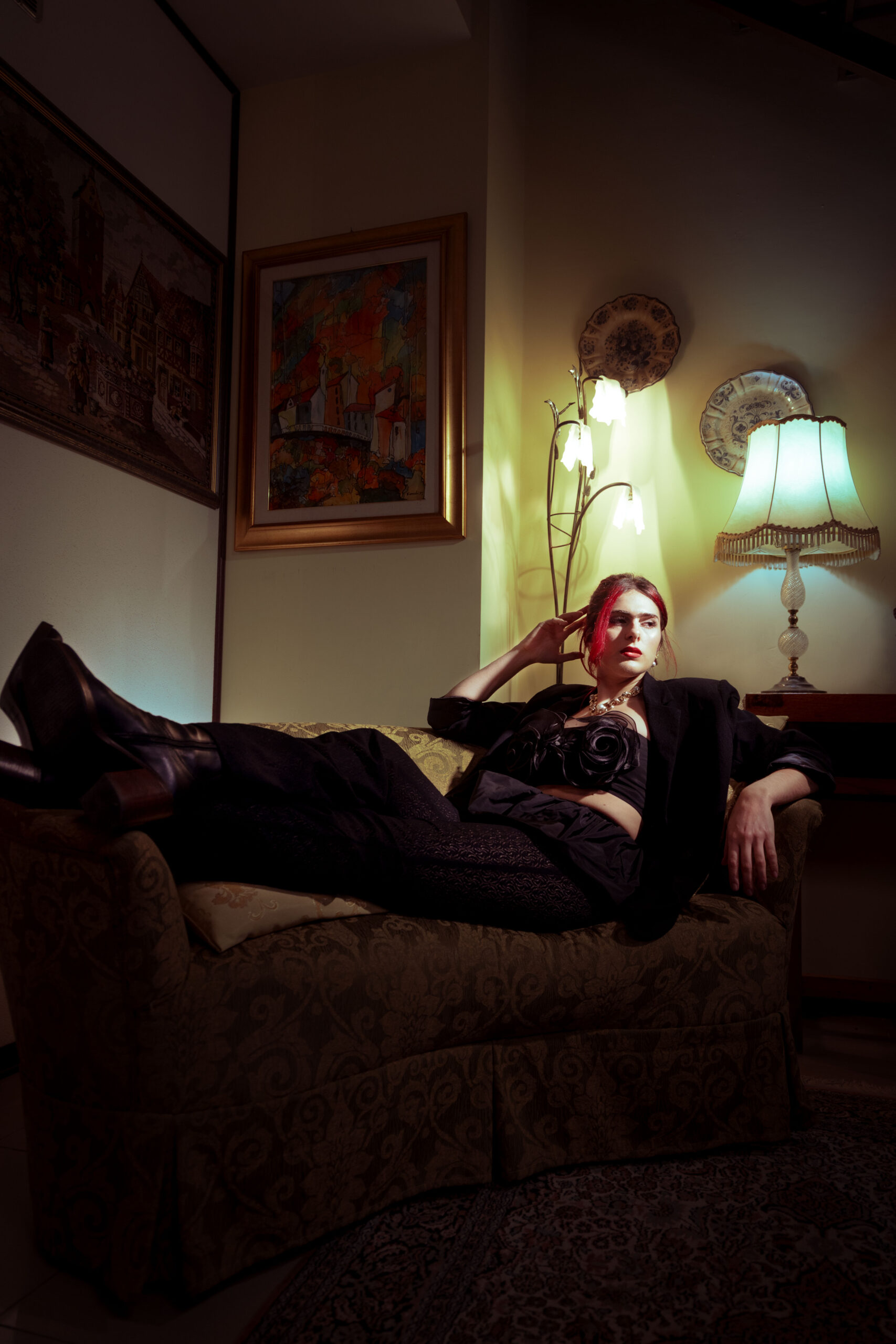
Emerging from Italy’s television spotlight to the international dance circuit, Alessia Labate has steadily carved out her place in the global electronic scene. Now recognised as both a compelling vocalist and sought-after songwriter, she has collaborated with leading labels and artists across Europe and the US, including recent work alongside Armin van Buuren and Like Mike. With millions of streams, major festival appearances and a growing reputation behind the scenes as co-founder of international writing camp platform Seven Songs, Alessia represents a new wave of artists who balance creative credibility with commercial impact. We caught up with her to discuss her journey so far and what lies ahead.
You’ve been immersed in music from a very young age, from Italian TV shows to international songwriting camps. Looking back, what do you feel has most shaped you as an artist today?
Definitely my parents and their musical influences. My mum is a huge Michael Jackson fan, so I basically know every single one of his songs, and my dad is a massive Toto fan. I think you can still hear both of those influences in my music today. I have a very strong pop foundation because of them.
My mum used to run a dance school and later worked as a Pilates and yoga trainer, so I basically grew up in gyms surrounded by music from the early 2000s to 2012. I remember the first time I saw Empire of the Sun playing on a gym screen, I was completely fascinated. At the same time, I would spend hours in the studio with my dad while he was producing and writing. I was definitely influenced by the way he approaches songwriting.
In my early teen years, I discovered Disney Channel. I was a huge fan of High School Musical and Hannah Montana. I became a Belieber at the very, very beginning. When I discovered social media, I also found the early days of EDM, around 2014 to 2016, and I completely fell in love with it. The emotion, the energy… I remember I was the only one at school listening to that kind of music.
And now, looking back, it feels surreal. I made all my dreams come true.
Not Home feels emotionally restrained yet very direct. What first drew you to the song, and how did you connect with its central theme of belonging and displacement?
From the very first listen, I was drawn to the vulnerability of the song. It doesn’t try too hard, and that’s what makes it powerful. The theme of belonging and displacement resonated with me on a personal level. I’ve experienced moments where something that once felt like home suddenly didn’t anymore, especially after an intense breakup a few years ago.
At the same time, I think that feeling is universal. We’ve all had moments where we felt out of place, either in relationships or within ourselves. That emotional honesty is what made me connect to it instantly
How did the collaboration with Alan Walker come about, and what stood out to you about his creative approach once you began working together?
I was in Calabria when I received an email from his team saying they were looking for a vocalist for Not Home and thought of me. I immediately recorded a demo, and within a few days, we finalised the track. It was surprisingly fast and smooth.
What stood out to me is how intentional and clear his creative world is. There’s a strong identity there, but also space for emotion. That balance made it very easy to step in and contribute something authentic
Your vocals on “Not Home” feel integral to the track rather than a traditional feature. How involved were you in shaping the topline and emotional direction of the song?
Even though the song was already written, I was very involved in shaping the emotional direction. I experimented with different tones, harmonies, and intentions until it felt right. For me, it’s never just about singing the notes — it’s about delivering the emotion in a way that feels truthful.
I was very careful during the recording process to protect that vulnerability. A vocal performance can change completely depending on how you approach it, and I wanted it to feel intimate and grounded.
You’ve worked across pop, dance and underground electronic music, from STMPD releases to writing for other artists. How do you personally balance commercial appeal with emotional authenticity?
I always start from emotion. So most of my songs feel authentic to me because they come from a real place. At the same time, I do enjoy a more commercial approach sometimes, especially when there’s a clear concept or direction to develop. I find that fun and creatively stimulating.
But writing from the heart is therapeutic. That’s where I feel the most aligned. The balance comes naturally when the emotion is real but the structure is strong
Having collaborated recently with artists like Armin van Buuren and Seth Hills, how would you say Not Home differs creatively from those projects?
“Gimme The Love” with Armin feels much more anthemic and festival-driven. The message is still emotional, but it’s expressed in a more energetic and expansive way.
Not Home is more of a pop song wearing an electronic dress. It’s more laid-back and intimate. The emotion is conveyed in a softer, more vulnerable way. It’s less about release and more about reflection
Many listeners describe your voice as intimate and emotionally grounding. How conscious are you of vulnerability when recording vocals, especially on more minimal productions like this?
Very conscious. I want people to feel exactly what I’m feeling. When I listen back to my takes, it has to feel right emotionally. I try to protect that feeling during comping and editing, because that stage can really make or break a performance. Sometimes a technically perfect take isn’t the most powerful one emotionally
You’ve built a parallel career as a songwriter for others as well as a solo artist. How does that dual perspective influence the way you approach collaborations like this one?
It gives me perspective. Being a songwriter taught me the power of collaboration and the importance of letting other people guide your vision sometimes. Before writing, we often talk for hours about our lives, and there’s always a common point we connect on. That process is very cathartic.
When I’m the artist, I focus on feeling and being present, while my co-writers help me make clear decisions and guide me through my blind spots. It’s a beautiful balance
Not Home is set to appear on Alan Walker’s upcoming album Rise of the Drones. What does it mean to you to be part of a larger artist project at this stage of your career?
It means a lot. Being part of a larger project like this feels like recognition and trust. It shows that my voice and my interpretation can live inside a bigger artistic vision.
After more than 15 years of working in music, it feels like a huge personal satisfaction. It’s a real sense of gratification and also a push to set even bigger goals for myself. At the same time, it reminds me to enjoy the journey, because in the end that’s what really matters. I’ve learned that after years and years of work that sometimes felt like it wasn’t leading anywhere.
They say that when you let go, something magical happens and things start to align. And honestly, I believe that’s true
Looking ahead, what do you want people discovering you through Not Home to understand about Alessia Labate as an artist, beyond just this collaboration?
Music is visceral for me. It’s almost a higher power that keeps me grounded. If it wasn’t for music and the way it allows me to express my moods, I would probably be a very unhappy person, maybe even lost. The downside of being like me is that everything is felt ten times more, both the good and the bad. Without an outlet, that intensity can become overwhelming very quickly.
My moods shift fast, and music helps me make those swings manageable. I don’t like to label myself, because I truly believe it’s okay to feel everything. It’s okay to be human in a world that often wants us to be flat and emotionless.
If people who feel that same intensity find comfort or inspiration in my music, then I’ve done my job.
Catch Alessia’s latest release here: