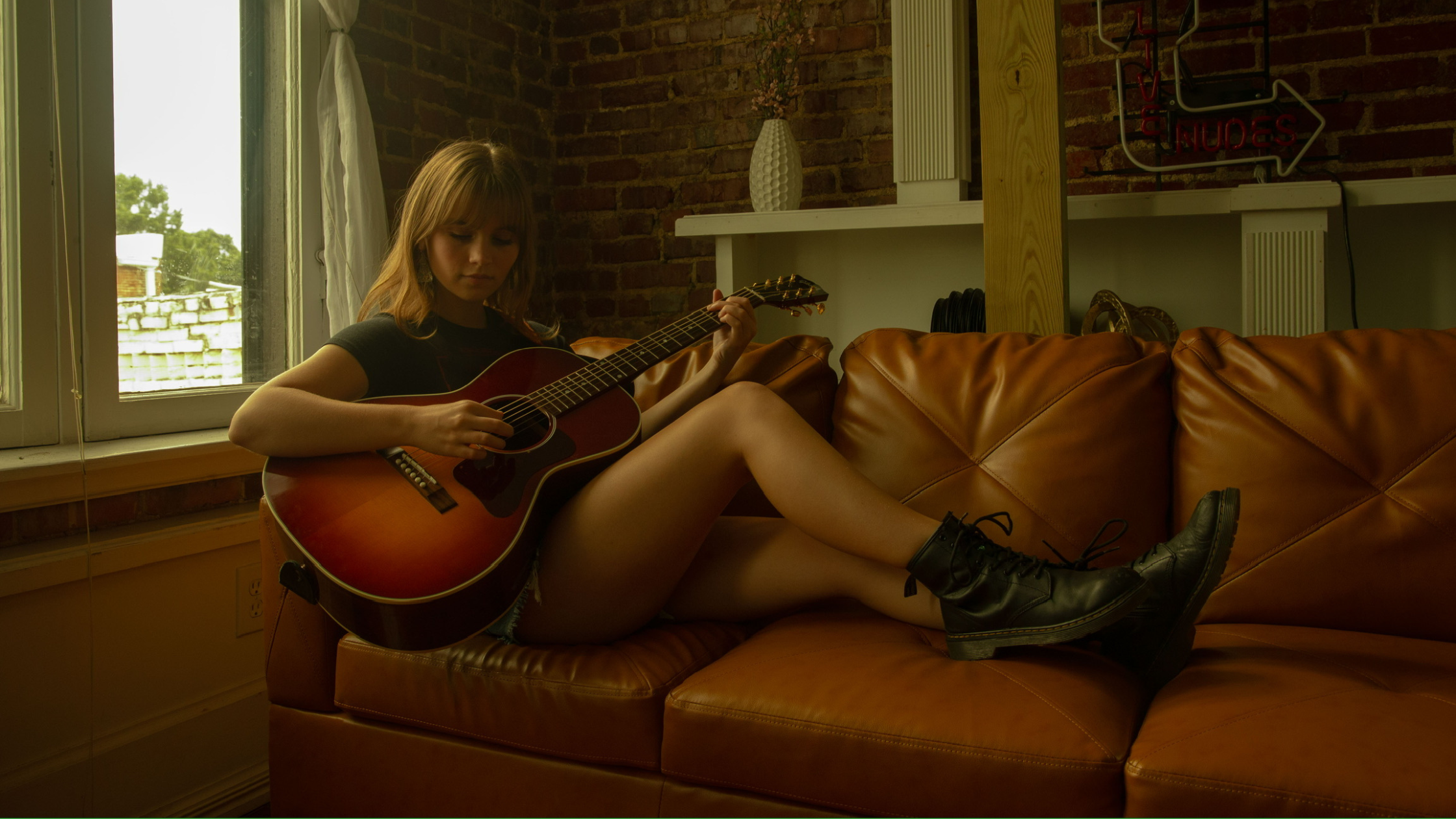
There’s a certain kind of artist whose story feels inevitable in hindsight, the kind where every early influence, every small moment, quietly points toward a life in music. For Nashville-based singer-songwriter Ava Claire, that path began not on a stage, but on a page.
Long before picking up a guitar, she was immersed in words. Raised in a home where storytelling was woven into everyday life, creativity wasn’t something reserved for special occasions, it was constant. “My mom made everything a song growing up. I mean everything, getting dressed, waking up, heading to school,” she recalls. That musicality, paired with a deep love of reading, laid the foundation early. Books were always within reach, and one in particular left a lasting impression, a Shel Silverstein collection she admittedly “stole” from her older sister. From there, poetry became her first outlet, a way to process, express, and create something that felt entirely her own.
That instinct to tell stories eventually found a new form in songwriting. While the transition felt natural, there were defining moments that solidified her path. One came in the larger-than-life setting of a Taylor Swift Speak Now tour stop. Watching Swift suspended above the crowd, commanding awe from thousands, sparked something undeniable. “I knew that’s what I wanted to do with my life,” she says. But it was a quieter, more intimate moment that truly reshaped her perspective, seeing someone cry while listening to her song at just fourteen years old. “That really changed how I looked at songwriting and performing as a whole.”
Her musical journey was largely self-driven from the start. After beginning to write songs at eight, she picked up the guitar at nine, teaching herself by ear. Those early performances may not have been technically perfect, but they were fearless. “I was quite bad, but I forced my parents to watch every single performance,” she laughs. That persistence paid off, eventually leading her to a mentor, a guitar teacher named Georgia, who guided her for seven formative years and helped deepen her understanding of both the instrument and music theory.
Though born in Tulsa, Oklahoma, Nashville has always been home in practice. Arriving there at just three months old, she was raised in one of the most musically rich environments in the country. “Growing up here and being surrounded by every type of music possible is a constant musical education,” she explains. Still, her Oklahoma roots remain a meaningful thread in her identity, grounding her storytelling in family and heritage.
That storytelling sits at the heart of her artistry, shaped by a wide range of influences. Artists like Ed Sheeran, Kacey Musgraves, The Beatles, and Elton John have all played a role, but she points to Jason Isbell as her most significant current inspiration. “His raw songwriting and complex storytelling inspire me every time I listen,” she says. It’s that same emotional depth and narrative clarity she strives to capture in her own work.
When it comes to writing, there’s no strict formula. Some songs are deeply autobiographical, drawn from personal experiences and emotions, while others are sparked by observation or imagined scenarios that feel vivid enough to be real. That balance allows her to explore both introspection and storytelling, creating songs that feel both personal and universal.
Sonically, she describes her music as “sad girl indie, Phoebe Bridgers esc,” a fitting label for a style rooted in vulnerability, atmosphere, and emotional honesty. But beyond genre, what stands out most is how her songwriting has evolved. What began as childhood musings, songs about sibling arguments or even the weather, has grown into something far more profound. As life introduced more complex emotions, songwriting became a way to process them. “It turned into this form of therapy,” she admits. “I know everyone says that, but it is true.”
For new listeners, she points to “Salt Mine” as the best entry point into her world. Written at sixteen, the track represents a turning point, both a deep dive into her songwriting and the clearest reflection of who she is as an artist right now. “It’s probably the beginning of this version of me,” she says.
And if her journey so far is any indication, that version is only just beginning to unfold.