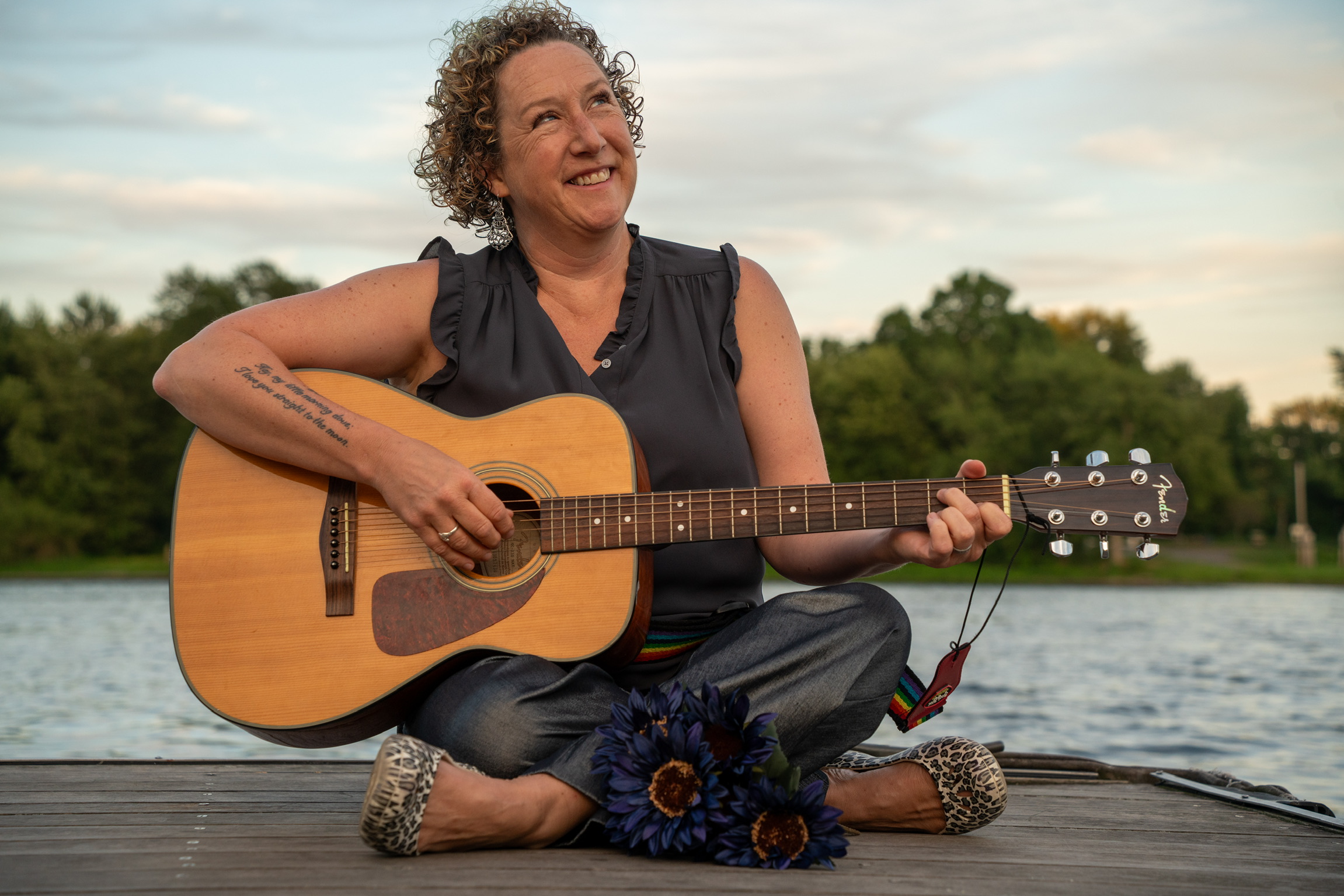
With ‘The Human Side’, Liz Reed leans into subtlety, crafting a song that feels intimate without ever demanding attention. Rather than relying on dramatic moments, the single unfolds with quiet precision, slowly introducing soft percussion, warm organ tones, and layered harmonies that deepen the emotional weight of the track as it progresses. Reed’s vocal delivery is steady and unforced, carrying the kind of sincerity that makes every lyric feel lived-in and believable.
At its core, the song thrives on emotional transparency. Reed writes with a natural, almost conversational tone that allows reflections on vulnerability and connection to land gently but effectively. There is a timeless folk sensibility woven into the arrangement, yet the production keeps everything feeling fresh and understated, avoiding unnecessary embellishment in favour of atmosphere and honesty.
We sit down with Liz to learn all about her new single, her journey so far as an artist and much more, here at Music Crowns!
—
Hey Liz, welcome to Music Crowns! How’s it going?
It’s good to be here, and thanks so much for listening to the song!
You started writing songs at just 10 years old. What do you remember about that first creative spark, and how has your songwriting evolved since those early days in Woodstock?
I had a lot of big feelings (I think most of us do), especially as a pre-teen. Writing them down just felt natural to me. I started journaling using poetry, prose, painting, and drawing. Now I write constantly. I have journals in my purse, in my backpack, in the car. I take what I hear and see around me and turn it into poetry; most of it is drivel, but sometimes I’ll come up with a good line or two. Those two lines might then inspire another idea, or a whole song.
How did playing open mics, coffeehouses, and bookstores as a teenager shape your identity as a performer?
Because music is a male-dominated industry, I was something of an anomaly at open mics and bars. In some places, I was treated quite well because of that; in others, I was scoffed at, even ridiculed. I had to become tough, act as though nothing bothered me, be self-sufficient. And those environments were loud–I often needed to shout to be heard, so I used my loud, high soprano voice to capture attention. That approach informed my performance style for a long time afterward: I developed a loud strumming pattern on guitar and a lot of my early material is pitched very high.
How would you describe your sonic identity to someone hearing your music for the first time? This is a tough question, believe it or not. I always knew who I wanted to sound like: I admired the brash, no-nonsense style of Ani Difranco and Patti Griffin, but was also enamored with Billy Joel’s ability to tell a story and write catchy chord progressions. I loved Joni Mitchell’s ability to craft a gorgeous melody and still adore her gorgeous soprano. So I would hope that on my best day, I’m a mix of all of those folks.
‘The Human Side’ carries a very conversational tone, what inspired that lyrical approach?
I wanted to write a protest song, but using gentle words and a gentle tone. As I’ve played more listening rooms and fewer bars, I no longer have to shout. Now I can use subtlety and a quiet approach to get my point across.
Can you talk about the decision to let the instrumentation evolve rather than overwhelm the listener from the start?
I love that you heard that! We do the same in conversation or in a written essay: as we get deeper into the subject and circle back to the main point, we become more emphatic. So our musical approach in the song mirrors that, building to the last chorus that brings the message home.
The song encourages listeners to move beyond “us vs. them” thinking. Why was this an important message for you to share right now?
We are incredibly polarized in this country, and it is hurting us. Compassion and care are not first on folks’ minds, survival is. As you said, the “us vs. them” mentality drives us further and further from each other. So in the face of the so-called immigration “crisis” and in the face of homelessness and joblessness, it is incredibly important to remember that we are all connected by our humanity. Remembering that will help begin to heal us as a country.
Performing as a national finalist at the South Florida Folk Festival must have been a standout moment. What did you take away from that experience?
What an incredible experience! I was surrounded by some of the best in the folk world, and I soaked up as much advice and learned as much as I could. I connected with as many of my fellow performers as possible, having real conversations about music, performing, touring and song craft. There are always new things to learn, so I value the relationships that I’m able to build at festivals and conferences.
Looking ahead, what kind of impact do you hope your music will have, both artistically and socially?
I hope that anyone who feels alone, isolated or “other” can know that there are people out there to turn to. Our record label, Bigger Beast Records, is building a community of musicians that support and help one another, which is rare in this industry. So let’s be the leaders, the ones who reach out and lend an ear, a shoulder, a hand. A fellow label artist lent me his guitar at a festival recently (anyone who has a favorite instrument knows what a big deal this is!). He is just a kind-hearted guy, and he handed it to me without a second thought. This is what we are building: a group of kind, compassionate folks who love music and who want to better the world around them.