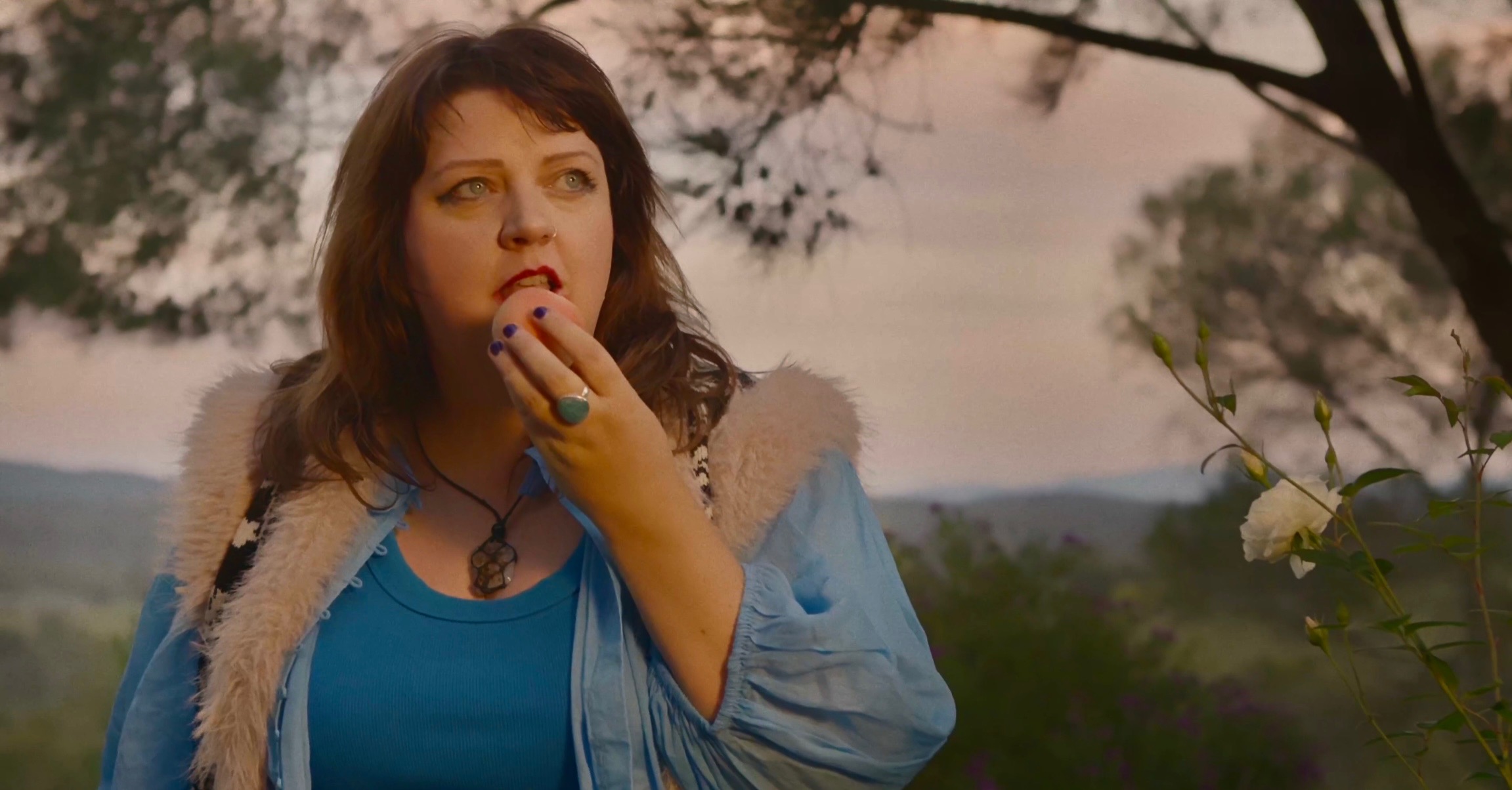
Caddy Callaghan doesn’t swagger into “Sweet Fool” kicking down saloon doors or setting Marshall stacks on fire. She slips in through the side entrance carrying a piano melody that sounds almost too polite for the times we’re living in. Almost. Because beneath its warm veneer lies something far more dangerous than distortion pedals or manufactured attitude: genuine conviction.
We’ve spent decades watching pop music become increasingly allergic to sincerity. Irony became currency. Vulnerability became branding. Everybody learned how to pose with their wounds before they learned how to heal them. Then along comes Caddy Callaghan, a Melbourne songwriter who’s apparently been writing songs longer than some streaming platforms have existed, and she has the audacity to mean every single word she sings.
That’s punk rock.
Forget the leather jackets.
Forget the eyeliner.
Try standing behind a piano and admitting that you’ve spent years chasing a dream while wondering if you’re fooling yourself.
That’s terrifying.
The opening piano doesn’t announce itself with bombast. It simply arrives, like an old friend sitting beside you after everyone else has gone home. There’s something unmistakably classic about the construction of “Sweet Fool.” You hear echoes of Billy Joel’s melodic craftsmanship, a little Bonnie Raitt warmth, maybe even the polished emotional accessibility that made adult pop such fertile ground before algorithms convinced everyone every chorus had to explode within fifteen seconds.
But nostalgia isn’t the point.
This isn’t retro.
It’s timeless.
Rick Price’s Nashville production understands something most contemporary producers have forgotten: songs breathe. The arrangement expands naturally instead of desperately searching for “the drop.” The harmonies aren’t there to impress you; they’re there to comfort you. Every instrument seems to understand its assignment, serving the emotional arc rather than competing for attention.
Imagine that.
Musicians actually listening to one another.
Callaghan’s vocal performance is equally refreshing because she refuses to oversell the material. She doesn’t attack every note like she’s auditioning for a reality television competition. Instead, she inhabits the lyric with the quiet confidence of someone who’s actually lived it. That’s a distinction you can’t fake, no matter how expensive your vocal chain is.
The story behind the song only deepens its resonance. Written while stealing a few precious minutes in a school music room between teaching classes, “Sweet Fool” isn’t some manufactured songwriter’s-room exercise designed around market research. It’s a diary entry accidentally becoming universal. The image of a teacher sitting at a piano, dreaming about another life before the school bell demands reality again, says more about artistic perseverance than a thousand motivational Instagram posts ever could.
And here’s where the title becomes brilliant.
“Sweet Fool.”
Not fool.
Sweet fool.
There’s compassion in that phrase.
Callaghan recognizes the absurdity of believing impossible things while simultaneously insisting that impossible dreams are often the only ones worth pursuing. Whether she’s singing about romantic longing or creative ambition hardly matters because both require exactly the same leap of faith. Love and art have always been cousins. Both demand that we risk embarrassment for the possibility of transcendence.
That’s the gamble.
Most people fold before the cards are even dealt.
What makes “Sweet Fool” quietly revolutionary is its refusal to apologize for optimism. In 2026, hope often feels like an unfashionable emotion. Cynicism gets more clicks. Anger trends faster. Everyone wants to be the smartest pessimist in the room.
Callaghan would rather be the “sweet fool.”
Good.
History has generally belonged to the fools anyway.
Musically, the song unfolds with the patience of someone unconcerned with fleeting trends. The chorus arrives not as a manufactured hook but as emotional release, carried by layered harmonies that feel earned rather than engineered. There’s enough polish to satisfy pop audiences without sacrificing the organic humanity that makes the recording memorable.
That’s a difficult balance.
Most artists either drown authenticity in production or mistake roughness for honesty.
Callaghan avoids both traps.
There’s also something deeply admirable about the context surrounding this release. Independent artist. Mother of three. Founder of her own label. Decades spent writing before stepping fully into the spotlight. In an industry obsessed with overnight success stories that rarely happen overnight, “Sweet Fool” reminds us that some artists bloom exactly when they’re supposed to.
Maybe experience still counts.
Maybe life still teaches things that TikTok can’t.
Maybe songs written from accumulated years carry a different weight than songs assembled for playlists.
I am fond of chasing the glorious messiness that made music feel alive, and that’s ultimately where “Sweet Fool” succeeds. Not because it’s messy—it’s remarkably elegant—but because it refuses to become another disposable product in the endless digital conveyor belt. It has fingerprints on it. It has history. It has scars. It has hope.
Most importantly, it has a heartbeat.
And in a musical landscape increasingly populated by synthetic perfection and algorithmic predictability, that heartbeat feels almost rebellious.
Maybe being a sweet fool isn’t foolish after all. Maybe it’s the only sane response left.
https://www.instagram.com/caddycallaghanmusic/
https://www.facebook.com/caddycallaghanmusic/