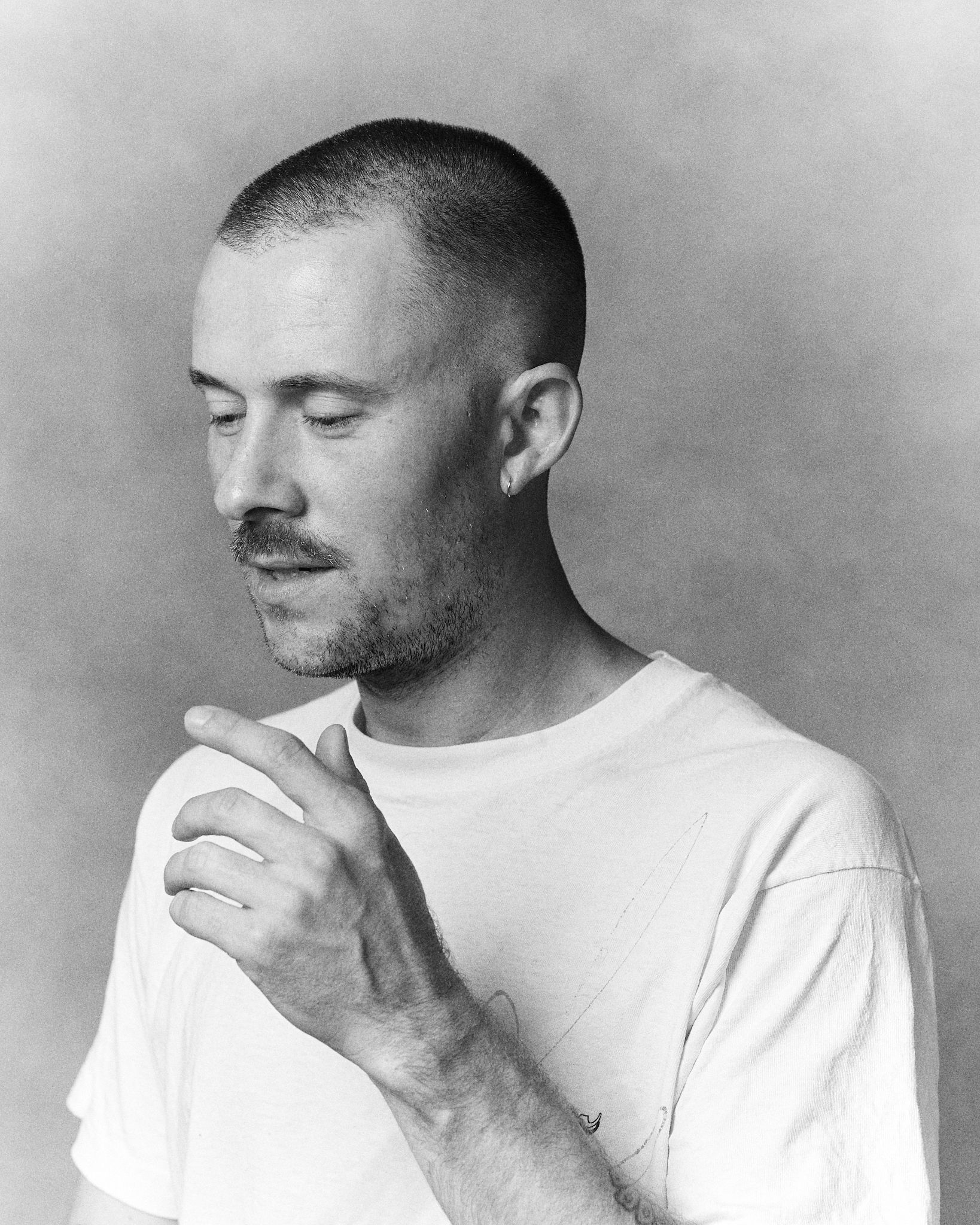
Max Swan strips things back to their emotional foundations on ‘LMK’, an intimate, quietly affecting single about learning to show up for the people we love. Built around piano, voice and an understated arrangement, the track transforms five years of upheaval into something remarkably warm, finding hope not in grand gestures but in the simple promise of being there when somebody needs you.
There is a fascinating duality to Swan as an artist. A Philadelphia-area songwriter, producer, vocalist, composer and trained saxophonist, he spends his working days as a plumber before returning home to create music informed by jazz, alternative R&B and soul. Rather than keeping those worlds separate, ‘LMK’ demonstrates how naturally they feed into one another. This is music built with the same patience, practicality and attention to detail as anything made by hand.
That connection became particularly significant following the devastating flood that hit Swan’s home in 2021. The subsequent five-year rebuilding process didn’t merely provide inspiration for ‘LMK’; it fundamentally changed the circumstances in which the song was created. Temporarily without a proper space to work, Swan found himself disconnected from the constant flow of melodies and arrangements that had previously characterised his creative life.
Eventually, music found its way back.
Part of ‘LMK’ had existed before the flood, initially emerging from Swan’s attempts to write about reaching out to a struggling friend. Its chorus, however, resurfaced later through an old voice memo discovered while he was clearing out the damaged house. That sense of rediscovery gives the finished song an additional emotional resonance. Like the home surrounding it, the track was pieced together from something that had survived.
The piano at the centre of the recording captures that story beautifully. Recorded as a voice memo on an upright piano in his brother’s childhood bedroom rather than through a conventional studio setup, it carries an intimacy that pristine production might have erased. You can almost feel the room around the instrument, making the recording seem less like a polished performance and more like being present while Swan works through the song.
That restraint represents something of a departure for an artist accustomed to constructing expansive arrangements from numerous vocal and instrumental layers. Here, Swan limits his palette to piano, EWI, saxophone, cello and bass, allowing space to become as important as sound.
It proves to be the right decision. ‘LMK’ doesn’t need to announce its emotional significance because its story is already embedded in its imperfections and simplicity. Swan’s vocal delivery sits comfortably within the arrangement, communicating vulnerability without turning the song into melodrama.
Even the songwriting process reflects the realities of his life. Swan describes carrying melodies and lyrics in his head through long plumbing shifts before returning home to gradually develop them. There is something beautifully appropriate about that image: creativity existing alongside physical work, waiting patiently until there is finally time and space to give it form.
At its core, though, ‘LMK’ is not really a song about a flood or rebuilding a house. Those experiences provide its emotional architecture, but its message is considerably broader. It is about becoming someone capable of loving people openly and actively, the difference between caring about somebody and actually showing up for them.
The repeated promise “I’ll be there for you” therefore carries more weight than its simplicity initially suggests. Swan isn’t presenting support as something effortless. Sometimes being there for another person costs time, energy or comfort. ‘LMK’ argues that doing it anyway is part of what love actually means.
That philosophy extends to the accompanying video, which documents the years-long reconstruction of Swan’s home from the immediate aftermath of the flood through to its completion. In doing so, the visual narrative makes the song’s metaphor tangible: rebuilding happens gradually, through countless small acts that might seem insignificant until you look back and realise something whole has emerged.
There is no dramatic reinvention at the end of ‘LMK’. Instead, Swan finds meaning in persistence. Houses are repaired. Relationships are maintained. Songs are finished. People find their way home.
‘LMK’ is ultimately a beautiful example of how limitation can sharpen rather than diminish creativity. By stripping away the elaborate arrangements he might once have reached for, Max Swan allows the humanity of the song to sit completely exposed. What remains is tender, soulful and deeply sincere, a reminder that sometimes rebuilding a life and writing a song require exactly the same thing: patience, care and the willingness to keep showing up.