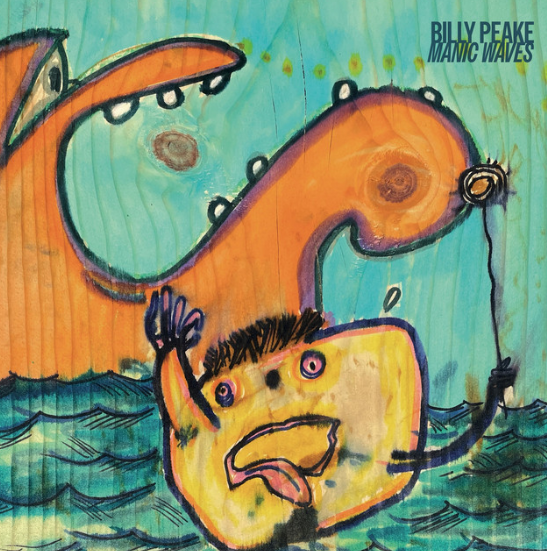
Billy Peake’s return with Manic Waves doesn’t read like a comeback so much as a re-entry with intent. This is not an artist dusting off old instincts or chasing nostalgia; it’s someone rebuilding the idea of authorship from the ground up. After decades in respected Columbus bands and a long retreat into family life, Peake arrives with a solo debut that feels less like a first step and more like a hard-won recalibration of voice, purpose, and pressure.
What gives the record its charge is the sense that nothing here is accidental. Peake didn’t “return” to music so much as reassemble it on his own terms after stripping away the collaborative safety net. That isolation—especially the pandemic-era incubation of attic demos—becomes central to the album’s identity. You can hear a songwriter testing the edges of autonomy, discovering what happens when there’s no band consensus to dilute instinct or soften conviction.
Sonically, Manic Waves thrives in contradiction. It’s angular but melodic, dense but inviting, political yet deeply personal. The record stitches together indie rock, power pop, new wave shimmer, and college rock grit without ever sounding like genre tourism. Instead, it feels like a single language spoken with multiple dialects—each track another attempt to reconcile chaos with clarity.
Lyrically, Peake’s worldview is unflinching but rarely humorless. Even at its most pointed—whether confronting digital rage culture or ideological hypocrisy—the writing resists sermonizing. Instead, it leans into specificity, emotional texture, and a dark, often self-aware wit that keeps the album from collapsing under its own urgency.
Ultimately, Manic Waves works because it understands reinvention not as transformation into someone new, but as the refusal to keep performing the version of yourself others already understood. It’s a debut album that behaves like a second life.
PR: Decent Music PR