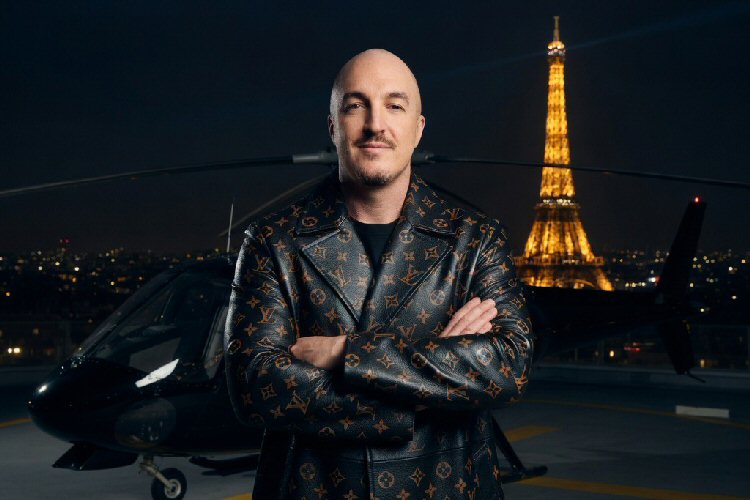
In a musical landscape increasingly dominated by disposable singles, algorithm-friendly hooks, and shortened attention spans, MrRay is attempting something radically unfashionable: emotional excess.
The Ukrainian-born artist, producer, lyricist and conceptual architect behind the rapidly expanding MrRay universe occupies an unusual space within contemporary electronic and dance-pop music — one built not only on songs, but on recurring emotional themes, cinematic storytelling, symbolic structures, layered visual mythology and a constantly evolving cast of vocal personalities.
Yet perhaps the most surprising thing about the project is that, according to the artist himself, the albums that introduced his name were never meant to represent the final vision.
Releases such as ‘Attractive Instants,’ ‘Feel The Sun’ and ‘Leaving It All Behind’ are now described by MrRay as “creative test runs” — exploratory works through which he experimented with different directions across synth-pop, Eurodance, emotional electropop, cinematic club music, rock influences, theatrical ballads and atmospheric storytelling.
Among those earlier releases ‘Attractive Instants’ occupies a particularly unusual place within the catalogue.
Unlike the heavier emotional architecture of Love Without Regrets, the album embraces movement, nightlife detachment, emotional spontaneity, and urban transience — almost functioning as a musical portrait of a drifting nomadic life across Asia.
The album also introduced distinct traces of J-pop and K-pop influence into the MrRay universe.
Bright melodic phrasing, glossy synth textures, emotionally stylized vocal delivery, lighter rhythmic structures, playful tonal shifts and dance-oriented pop sensibilities appear throughout the record while still maintaining the artist’s cinematic emotional language.
“That album smiles more” MrRay says.
“It talks more, laughs more, wanders more. It’s probably the closest thing I’ve made to a musical portrait of being emotionally nomadic in Asia.”
Tracks drift through cafés, passing strangers, apartment lights, taxis, temporary relationships, nightlife encounters, reflections, and fleeting emotional sparks that vanish before they fully settle.
Where Love Without Regrets seeks emotional resolution and inner peace, Attractive Instants thrives on movement itself — the beauty of never standing still long enough to fully belong anywhere.
“Before, I was searching” he says.
“I was experimenting with styles, moods, structures, different emotional tones. I needed those albums to understand what this project really wanted to become.”
That clarity, he believes, finally arrived with his latest large-scale release.
The recently unveiled double album Love Without Regrets (2026 — Part I & II) — released across May 9 and 10 alongside a wave of new singles — marks what the artist considers the true creative breakthrough of the project.
“That album feels like the first time everything fully connected,” he explains. “The emotional side, the cinematic side, the lyrical density, the atmosphere, the structure, the recurring voices — all of it finally became one world.”
The Internet Ensemble
Although MrRay remains the sole songwriter, lyricist, conceptual director, and primary creative force behind the project, the music itself unfolds through what feels like a much larger artistic ensemble.
Different recurring vocal personalities appear throughout the catalogue carrying distinct emotional energies — seductive, melancholic, theatrical, euphoric, vulnerable, glamorous, introspective, sarcastic or emotionally fragile.
Together, they form what fans increasingly perceive as the “MrRay universe”: a fluid collective of voices, moods, and recurring emotional identities moving through interconnected songs and visual worlds.
The artist describes much of the process as “internet-era album creation.”
Vocals are often recorded remotely across different countries and time zones, with collaborators contributing performances from entirely different parts of the world before tracks are finalized, arranged, and mastered in Shanghai, where MrRay currently lives and works.
“Sometimes vocals arrive from the other side of the ocean,” he says.
“Everything exists digitally first — ideas, demos, visuals, voices, revisions, atmospheres. It’s almost like building emotional films online.”
That decentralized process gives the albums an unusually borderless quality. The music feels geographically fluid: European emotionality, Asian urban atmosphere, global club culture, cinematic pop structure, and internet-age collaboration all intersect inside the same sonic universe.
Despite the increasingly ambitious scale of the project, MrRay’s daily life remains surprisingly grounded.
Outside music, he works full-time as a social studies and history teacher at an American high school division in Shanghai. In recent years, he also gained recognition within education circles after being selected as National History Day Teacher of the Year among foreign expat educators working in China.
The contrast between educator and emotional pop architect is striking — though perhaps less contradictory than it first appears.
“History is storytelling too” he says.
“It’s about memory, human emotion, conflict, choices, identity, consequences. Music and history actually overlap much more than people think.”
The Man who writes too much for pop music
One of the defining characteristics of the MrRay catalog is its lyrical intensity.
While modern dance-pop frequently prioritizes repetition, short hooks, and streamlined emotional messaging, MrRay often writes with near-novelistic density.
His songs are filled with internal dialogue, emotional contradiction, symbolic imagery, philosophical reflection, unresolved conversations, and long narrative passages that unfold almost like fragments of fiction.
At times, the sheer amount of text inside the songs feels almost excessive for electronic pop music. And he knows it.
“Sometimes I probably try to fit an entire novel into one track,” he says, laughing.
“A lot of people would probably tell me to cut half the lyrics.”
Yet surprisingly, the songs rarely feel heavy.
Through Eurodance momentum, melodic synth work, cinematic pacing, atmospheric layering, club rhythms, and emotionally fluid vocal delivery, MrRay somehow keeps the listening experience light even while carrying unusually dense lyrical material underneath.
“That’s the challenge” he explains.
“I love emotional detail. I notice tiny things, unfinished moments, contradictions, gestures, pauses. But I never want the songs to feel emotionally trapped. I still want people to dance, move, dream, escape.”
One recurring force behind that emotional intensity, the artist says, is his own personality.
“I’m extremely Cancerian” he admits.
“Very emotional. I absorb memories, atmospheres, emotional tension, nostalgia. Different singers in the project sometimes feel like different emotional fragments of myself.”
That emotional fluidity also shapes the project’s unusual approach to vocals.
Although primarily functioning as songwriter, lyricist, producer, and conceptual director, MrRay occasionally appears vocally within the music itself.
However, rather than presenting himself as a traditional technical vocalist, he openly embraces digital vocal processing and stylized production techniques as part of the project’s artistic language.
“I was never naturally great at carrying perfect melodies” he says openly.
“But don’t think imperfect technique should stop someone from creating music or chasing artistic dreams.”
Instead, he sees modern digital production as a creative extension of emotional expression rather than something diminishing authenticity.
“Some people have technically perfect voices but nothing to say emotionally” he explains.
“I’d rather hear emotional truth inside an imperfect voice than emptiness inside a perfect one.”
Q&A WITH Mr Ray
Q: How quickly can you write music?
MrRay: Sometimes terrifyingly fast. I’ve written complete songs in fifteen minutes. And sometimes I can go from lyrics and melody to a fully finished production in two or three days. My brain never really stops generating ideas.
Q: Your songs often feel cinematic. Why?
MrRay: Because I almost never hear music as isolated audio. I see movement, tension, rooms, streets, emotional situations, conversations, silence, visual transitions. Some songs already exist in my head like complete films before I even write the lyrics.
Q: Did you ever use ChatGPT or AI tools for your projects, lyrics, or creative process?
MrRay: Oh, that’s actually a two-fold question. Of course I use ChatGPT sometimes — honestly, like many people do now. But only for polishing, organizing, or cleaning up text for publishing platforms, presentations, descriptions, or occasionally helping me find a rhythm or alternative phrasing for a specific line when I get stuck structurally.
But emotionally? That part has to come from real life. I think if you fully outsource emotional writing to AI, people eventually feel something missing. The technical structure may look correct, but the emotional experience often feels dry or emotionally artificial.
For me, songs begin with lived emotions, memories, contradictions, heartbreak, obsession, longing, fear, excitement — things you actually survive through as a human being. AI can help polish language. But it cannot replace emotional scars.
Q: Why release so much material now?
MrRay: Because for years the songs stayed unfinished. A lot of them were originally written between 2002 and 2005. Then life became busy with completely different projects. When I finally returned to music seriously, it felt like opening a floodgate.
Before the music returned
Long before launching the current project, MrRay already had a history in entertainment and media. During the mid-to-late 1990s, he hosted a youth-oriented music and entertainment television program in Ukraine that received recognition for Best Music Entertainment Program between 1995 and 1998.
That background still shapes the way he approaches artistic presentation today.
The albums often feel staged like visual broadcasts, emotional episodes, or serialized cinematic worlds rather than conventional pop releases. He also previously collaborated with singers and performers in Ukraine, some of whom continue performing material he originally wrote years ago.
“I’ve always loved working with voices,” he says. “Every singer brings a different emotional color into the song.”
Love Without Regrets
At the centre of the project’s recent evolution stands Love Without Regrets (2026 — Part I & II) — an ambitious double album moving between emotional electropop, cinematic dance music, Eurodance, atmospheric club production, theatrical ballads, philosophical pop writing and urban emotional storytelling.
Across tracks such as ‘Instagram Shot,’ ‘Almost Yours,’ ‘All The Way,’ ‘You Were There,’ ‘Temporary Forever,’ ‘Untold,’ ‘Love Vectors,’ ‘Heart Excerpts,’ ‘Lost Keys’ and ‘I Am Home,’ the album explores temporary connection, emotional hesitation, longing, body-image pressure, identity, romantic ambiguity, memory, personal liberation and acceptance.
Thematically, the album behaves like a sleepless city. People drift in and out.
Relationships almost happen.
Moments dissolve before they stabilize.
Faces disappear into reflections, taxis, apartment lights, social performance, passing strangers, and emotional afterimages.
Yet underneath the melancholy lies a surprisingly hopeful philosophy.
The title track itself becomes the emotional thesis of the entire project — a sweeping statement about vulnerability, openness, courage, emotional honesty, and learning to embrace impermanence rather than fear it.
“I think people are becoming emotionally disconnected from themselves” MrRay says quietly.
“Everything moves too fast now. But even heartbreak proves something mattered. Even temporary love can completely change your life.”
Hidden Structures
Beneath the emotional storytelling lies another layer entirely: symbolic architecture.
Many MrRay albums follow a recurring 21-track structure in which the final seven tracks function as reinterpretations, alternate emotional perspectives or remixes.
The numbers themselves hold personal symbolic significance connected to the artist’s birth date and birth month.
Meanwhile, specific song positions — including tracks 1, 3, 7, 9, 10, and 14 — frequently act as hidden emotional anchors throughout the albums, tied to recurring numerical patterns associated with the artist’s 1977 birth year.
“I like hidden systems” he says.
“Not everything has to be obvious immediately. Sometimes listeners feel structure emotionally before they consciously notice it.”
Q: What ultimately matters most to you in music?
MrRay: “Emotion that stays with people after the song ends. Not perfection. Not trends. Not algorithms. Just emotional movement that still exists inside someone hours later.”
In an era obsessed with brevity, minimalism, and disposable attention, MrRay creates music that intentionally overflows: too many emotions, too many ideas, too many cinematic images, too many words.
And perhaps that overwhelming emotional ambition is precisely what makes the project memorable.