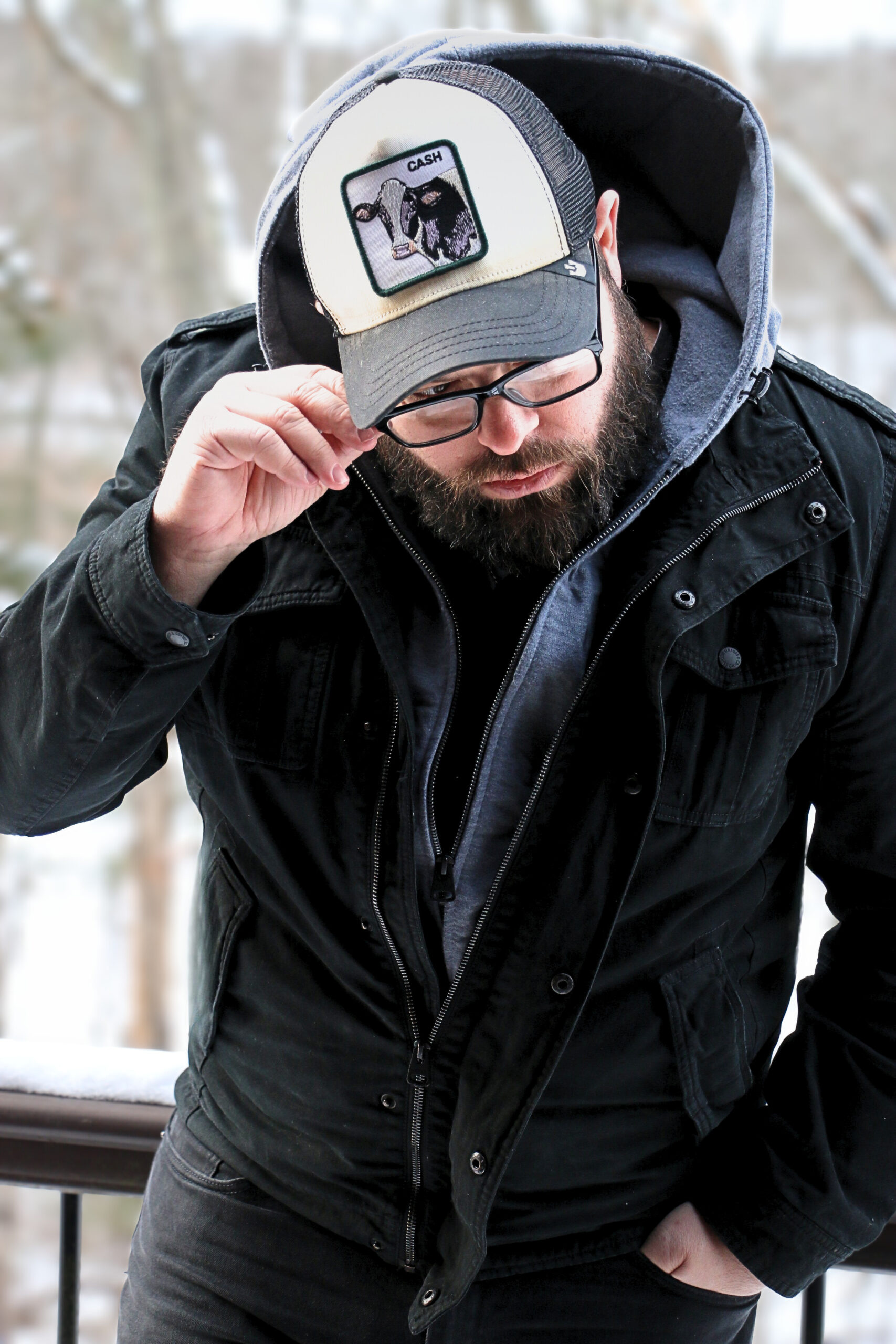
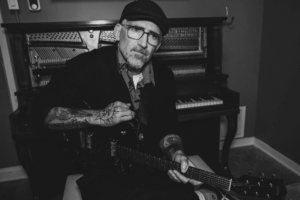
In a song that has touched many already, we sat down with Frank to learn all about ‘Made My Heart Grow Stronger’, his musical upbringing to get him to this point and much more here at Music Crowns.
—
Sum up your new single “Made My Heart Grow Stronger” in three words for our readers?
Dogs are inspiring.
You’ve been described as helping to revitalise heartland rock. What does that genre mean to you in a modern context?
I can’t say it was ever a purposeful thing for me. I just make the music that naturally comes out of me, and it wasn’t until relatively recently that people started categorizing it as “heartland rock.” But I understand why.
To me, the genre lives right on the edge of strength and vulnerability — and I think that’s where I tend to live too. It speaks for the person with a deeply empathetic heart who also wouldn’t think twice about smashing the window of a parked car on a hot day if they saw a dog trapped in the back seat.
There’s this switch that exists in certain people where compassion can instantly become determination and action when something matters. I think heartland rock has always lived in that space.
Growing up inspired by artists like Bruce Springsteen, Bob Seger, and Tom Petty, what elements of their storytelling and sound have stayed with you most in your career?
To echo my previous answer, I think what’s stayed with me most is the balance between vulnerability, aggressiveness, and swagger — all wrapped inside an intelligently poetic package.
I look at a song like Springsteen’s The Rising. On the surface, it’s this huge rock anthem. But underneath it’s an empathetic masterpiece where Bruce steps into the boots of a firefighter on 9/11. That’s powerful. That’s a song that changes lives. That’s a song that speaks for people who don’t have Bruce’s voice.
To me, that’s art.
There’s a strong sense of reflection and forward motion throughout your music — is that contrast intentional?
I’m not sure if it’s intentional as much as my commitment to authenticity is intentional. I try to live my life under a personal code of always maintaining perspective, and I think that naturally finds its way into the writing.
That mindset blends with my desire to accomplish things that feel bigger than the sum of their parts. Maybe that’s where the contrast comes from; climbing the tallest mountains you can while never forgetting the lessons learned along the way.
What was the recording and writing process like for this one?
This track honestly came together really easily. I wrote it as part of my record label Bigger Beast Records’ annual Paws & Listen Songwriting Journey, where 11 other songwriters and I each musically adopt a shelter animal looking for a home and write a song from their perspective.
This year we partnered with Vintage Pet Rescue in Foster, Rhode Island, and I got connected with a dog named Tofu. She had been found homeless in Providence, but somehow had a microchip tracing back to Honolulu. She was incredibly sweet, despite clearly having been on an unbelievable journey.
It would’ve been understandable if she had become rough around the edges after everything she’d been through, but instead she still carried this warmth and kindness. I connected with that deeply because I’ve had my own moments recently of feeling lost or stranded in life. So it became really easy to step into Tofu’s doggie shoes and tell a story I think a lot of people can relate to.
Recording wise, my dear friend Rees Shad offered me his studio three days before I left for the next leg of tour. I invited my friend Brie Green up to play violin and sing harmonies, and we tracked the song in a single day. Then I sent it to my producer Jimmy Nutt down in Muscle Shoals to mix, and the whole thing came together very organically.
Has your sound evolved as a result of spending so much time on the road performing live?
Absolutely. Mostly because playing live gives me instant feedback on what truly connects with people.
Music should feel magical in my eyes. If I can do something onstage that emotionally moves someone standing 50 feet away, then that’s magic and naturally I want to keep chasing more of that feeling.
Founding Bigger Beast Records marks a big step. What motivated you to build your own platform?
A lot of different things came together that eventually made it feel like a forgone conclusion.
I had spent my entire career as an unmanaged independent artist with no label, no booking agent, nothing; until 2023 when I connected with Brett Radin from Zero Management. Brett had worked with heroes of mine like Dave Matthews and Tracy Chapman, and after hearing the early mixes of The Trouble With Desire, he wanted to manage me. It honestly felt like a dream come true.
I signed with him in December of 2023, and almost immediately he started opening doors for me and teaching me so much about the industry. But tragically and unexpectedly, Brett passed away in February of 2024, and suddenly I found myself without much direction.
I had people around me telling me that I’d already built so much on my own and that maybe I was capable of creating something even bigger. I didn’t fully believe them at first. But then in November of 2024 I won the biggest New England music award for Independent Artist of the Year, and I think that was the moment that finally pushed me forward.
In less than two years, Bigger Beast Records has grown into running over 150 concerts annually across 10 states, raising more than $100,000 for nonprofit organizations, booking performances for over 500 artists, and releasing nearly 20 acts through our distribution roster.
It’s been wild to watch it all grow.
After everything you’ve built so far, what does success look like to you now?
That’s a tough question because the answer changes constantly.
One of my biggest heroes in the music business is Quincy Jones, and as Bigger Beast has snowballed, I’ve definitely found myself studying parts of his playbook more and more. But honestly, if I had to define success in one word, it would probably be balance.
If I can sustain a life where I’m able to tour the world playing music for people, continue writing and recording meaningful songs, raise money for charitable causes, help other artists I admire, and still maintain a healthy, loving, modest home and family life — then I would consider myself incredibly lucky.
I’m definitely not there yet. But it’s unquestionably what I’m striving for.