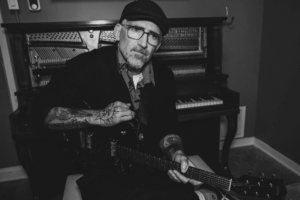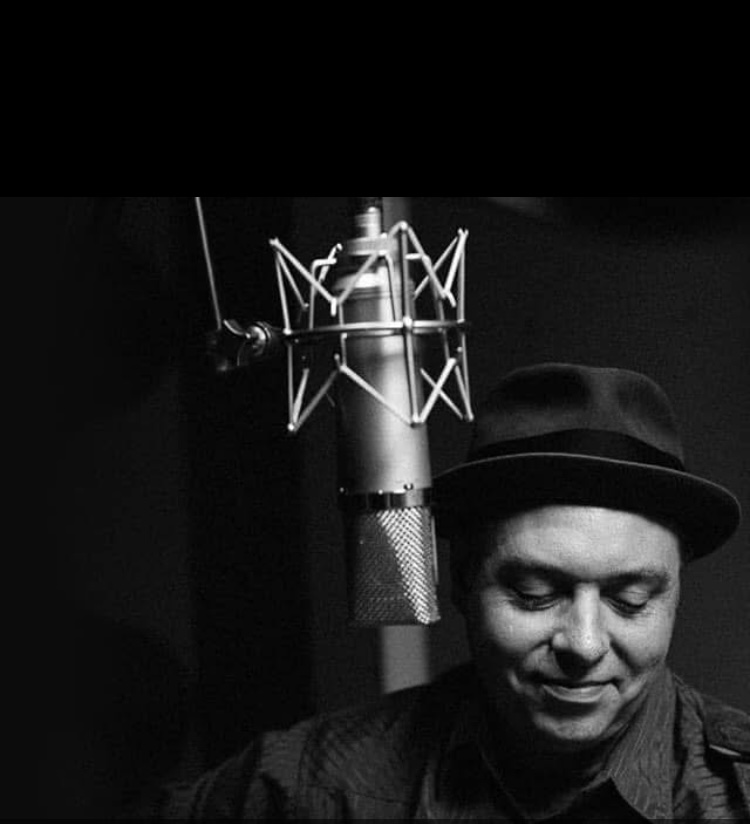
Steve Rodgers’ story is one of constant reinvention, where every chapter of a three-decade career feeds directly into the next. As a songwriter, performer, producer, and community builder, he has moved fluidly between roles, always orbiting the same centre: a lifelong commitment to songs and the people who make them. Now signed to Bigger Beast Records, Rodgers steps into 2026 with a renewed creative focus, releasing new material shaped as much by lived experience as by instinct.
At the heart of this next chapter is “Perfect Story,” a deeply personal track from his forthcoming album, recorded at his own Tiny Bunker Recording Studio in Connecticut. Entirely self-performed and self-produced, the song captures Rodgers in an unfiltered state, a solitary artist building atmosphere from the ground up. The result feels intimate and deliberate, rooted in the tactile honesty of Americana, indie folk, and vintage-leaning soundscapes.
“Perfect Story” sits within this evolved aesthetic: earthy, reflective, and quietly cinematic. Rodgers leans into gothic Americana textures and classic country undertones, crafting songs that feel like they belong in weathered rooms and open landscapes alike. There is sorrow here, but also a steady undercurrent of renewal, the sense that reflection itself can be a form of forward motion.
Enjoy this deep dive interview with Stephen where we chat all about the his journey as a musician and much, much more here at Music Crowns.
—
Your career spans songwriting, performing, producing, and even running a music venue. How have all these different experiences shaped your perspective on music today?
I could write an entire book answering this question. Living inside nearly every aspect of music and the music industry has given me a unique perspective. What I’m drawn to most are songwriters and bands that are genuine—artists who have something real to say. I connect with lyrics and lifestyles that feel believable, where what they sing about matches who they are and how they present themselves.
I quickly lose interest in music that feels contrived, canned, or fake in any way. The same goes for artists who present themselves—whether in image or sound—as something they’re not.
Running music venues for fifteen years, I had the chance to see thousands of artists across every genre. While not every genre speaks to me musically, what always stands out is heart: genuine lyrics written and sung by people who care about the world they’re walking through.
As a songwriter, I’m always asking myself to be completely honest in my lyrics. And as a producer, I’m drawn to working with artists who have something meaningful to say—people who feel called to share a message with the world. My real education in music didn’t happen in a classroom. It came from touring across the U.S. and beyond—sometimes playing 150–200 shows a year for nearly a decade—then spending 15 years owning and operating a music venue complex, and most recently the last five years producing records in my own Tiny Bunker Recording Studio. That journey taught me more about music and the music business than any traditional school ever could.
Leading Mighty Purple for a decade must have been formative. What lessons from that era continue to inform your songwriting now?
I started writing songs with my brother Jonny Rodgers—now known as the artist Cindertalk—when we were twelve and thirteen years old. No one ever sat us down and explained a songwriting formula. We simply wrote whatever came to our hearts and minds. Most of the time the songs were written by the two of us alone and then brought to the band later.
Songwriting for me has always happened in sudden moments—often at three in the morning. Many of the songs from those early years that fans still talk about were written in twenty minutes, scribbled on napkins or the backs of cereal boxes in the middle of the night. Even now I still write that way: pen to paper, catching the song while it’s there.
I almost never sit down and try to write. The writing comes when it comes.
In those early years I wrote alongside my brother. These days we live three thousand miles apart, so most of my writing happens alone. A lot of the songs I’m writing now reflect the current state of the world and how it feels to live in it.
Usually I’ll go back to a song a day later and make small revisions—not to change the heart of it, but to make sure what I was really trying to say jumps off the page, into the vocal, and out into the world. Now that I own a recording studio I will often write and record a song with full instrumentation front to back in 5 hours or less.
Losing your singing voice for over a year must have been incredibly challenging. How did that experience change the way you approach music and songwriting?
After my voice surgery, I had to become incredibly quiet. Not only in the way that I spoke, but also in the way that I sang. That experience changed the way I looked at the world around me entirely.
The way I write songs now comes from a much quieter, more introspective and spiritual place. In my youth, many of my songs came from a more angsty and outward place. I wrote a lot about heartbreak and depression back then.
After everything I went through with my voice, the source of my songs shifted. Now they tend to come from a place of kindness, love, and hope.
How do you balance honoring tradition with creating a sound that feels fresh and personal?
For me, there will always be threads in my music that harken back to my Mighty Purple years. From the very beginning, people told me that my voice was different from a lot of others out there. Like most young musicians, when I was a teenager I tried to emulate my heroes—both in the way I wrote songs and in the way I sang.
But fast forward forty years into a songwriting and music career, and the only person I emulate now is myself. The things I write about come directly from lived experience.
Mighty Purple built a loyal underground following, and I think people connected with the band because we were genuine. We weren’t trying to be something we were not. That authenticity mattered then, and it still matters to me now.
I hear from Mighty Purple fans all the time who tell me that they connect with the music I’m writing today more than ever. I’m grateful that the people who discovered the band back then have grown alongside me. It means a lot to know that the songs are still finding their way into people’s lives.
In your new material, there’s a theme of finding light without ignoring the dark. How do you translate that balance of hope and reflection into your music and arrangements?
Like many artists, I’ve had my share of mental health struggles over the years. I’m a spiritual person, and I’ve never tried to hide that. Even when things have gotten really dark for me, I’ve always managed to find some small pinhole of light to pull me back out again.
I’ve always gravitated toward music that carries a darker mood or emotional weight. But at the same time, I was raised in church, singing from a very young age, so that sense of spirituality and hope is just as much a part of my DNA. I think both of those elements live side by side in my music — the shadows and the light.
How does producing and mentoring others influence your own music and creative growth?
I learn something from every artist I work with, no matter where they are on their musical journey. I especially love working with young people who are new to songwriting and helping them find their true voice. When I’m producing artists who come in with incredibly strong songs, it inspires me to write more myself.
Sometimes after a 12-hour day in the studio with an incredible artist, I’ll stay up until three or four in the morning writing my own songs, still riding the creative spark that was in the room throughout the day.
For fans who have followed you from Mighty Purple to your solo work, what do you hope they take away from your new recordings?
My hope is that this new batch of songs reaches the people who’ve been with my music since the early days and connects with them on a deeper level than ever before.